
Commercial Epoxy Flooring
in Chillicothe, MO
Coatings picked around what your business floor actually deals with: the volume of traffic, whatever gets spilled or dropped on it and the conditions it works under.
Your Floors Should Work as Hard as Your Business Does
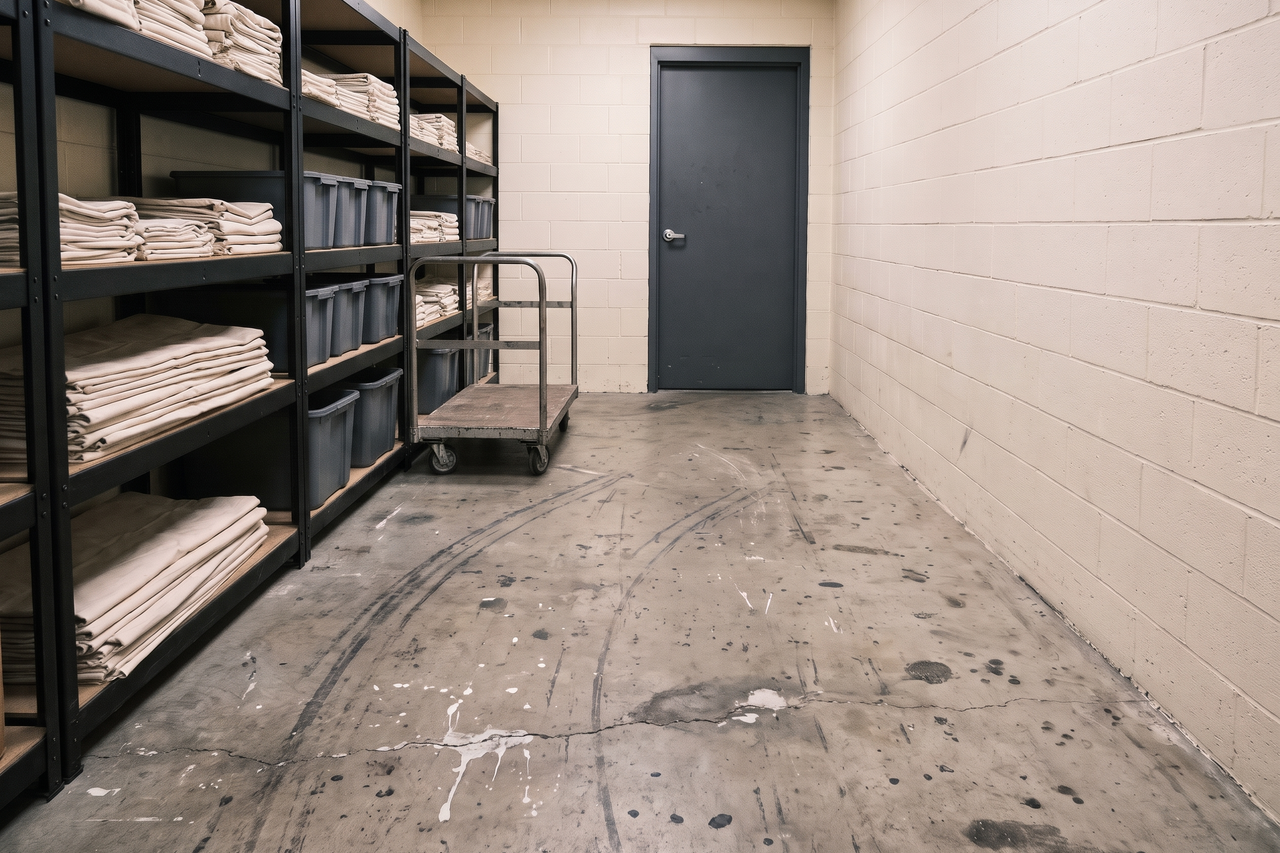
Commercial concrete takes the same punishment over and over in the same places. The entry mat zone, the checkout lane and the main aisle see a nonstop parade of shoes and shopping carts whenever the sign says open. Equipment and pallet jacks trace identical paths and wear identical grooves. Bare concrete drinks in whatever reaches it, and the floor slowly comes apart.
Customers judge the place before they’re at the counter. Scuffed traffic lanes, stains near the register and a chipped entry all send a message, even if no one consciously looks down. You don’t get to opt out of that message.
Raw concrete in a busy business also gets tougher to clean as it ages. Hairline cracks and rough wear spots trap grit a mop can’t fully get at. Staff work harder on the floor and see less for the effort.

The Right Floor Starts With Understanding Your Space
No two businesses ask the same thing of a floor. A tire shop bay, a dental office hallway, a retail floor and a commercial kitchen each bring a different mix of traffic, cleaning chemicals, spills and wash frequency, and each relies on appearance to a different degree.
The flooring professional’s first task is learning how the floor operates on a normal day: what rolls and walks across it, what weight it bears, which cleaners and chemicals regularly reach it, how much its look affects customers and whether access needs planning around. The recommended coating comes out of that review, not out of a default.
Commercial coatings suit a broad range of settings. Solid color makes sense in storage rooms, service corridors and utility spaces. Flake adds visual interest along with texture. Metallic belongs in retail and customer areas, where the floor plays a part in the mood of the place.
A Commercial Flooring Project Without the Guesswork
Commercial coating work follows a predictable path, from that first conversation through the finished floor. Here’s roughly how it usually goes.
01
Tell Us About Your Property
Tell us what kind of business this is, how the floor gets used during normal operation, the condition of the slab today and any access details your installer should know.
02
Get a Flooring Plan
The flooring professional comes to the property, inspects the slab, gets a sense of how the space operates and builds a prep and coating plan around that floor and its use.
03
Transform Your Space
Your installer carries out prep and coating in an order you’ve reviewed together in advance. Sequencing and any phasing depend on the project and on the contractor, including square footage, the system selected and what inspection reveals.
Planning a Commercial Flooring Project?
Give us a sense of the space and what the floor endures in normal operation, and request a commercial flooring estimate. Any photos or a rough set of measurements of the existing floor help, too.
The Wrong Floor Can Become an Expensive Problem
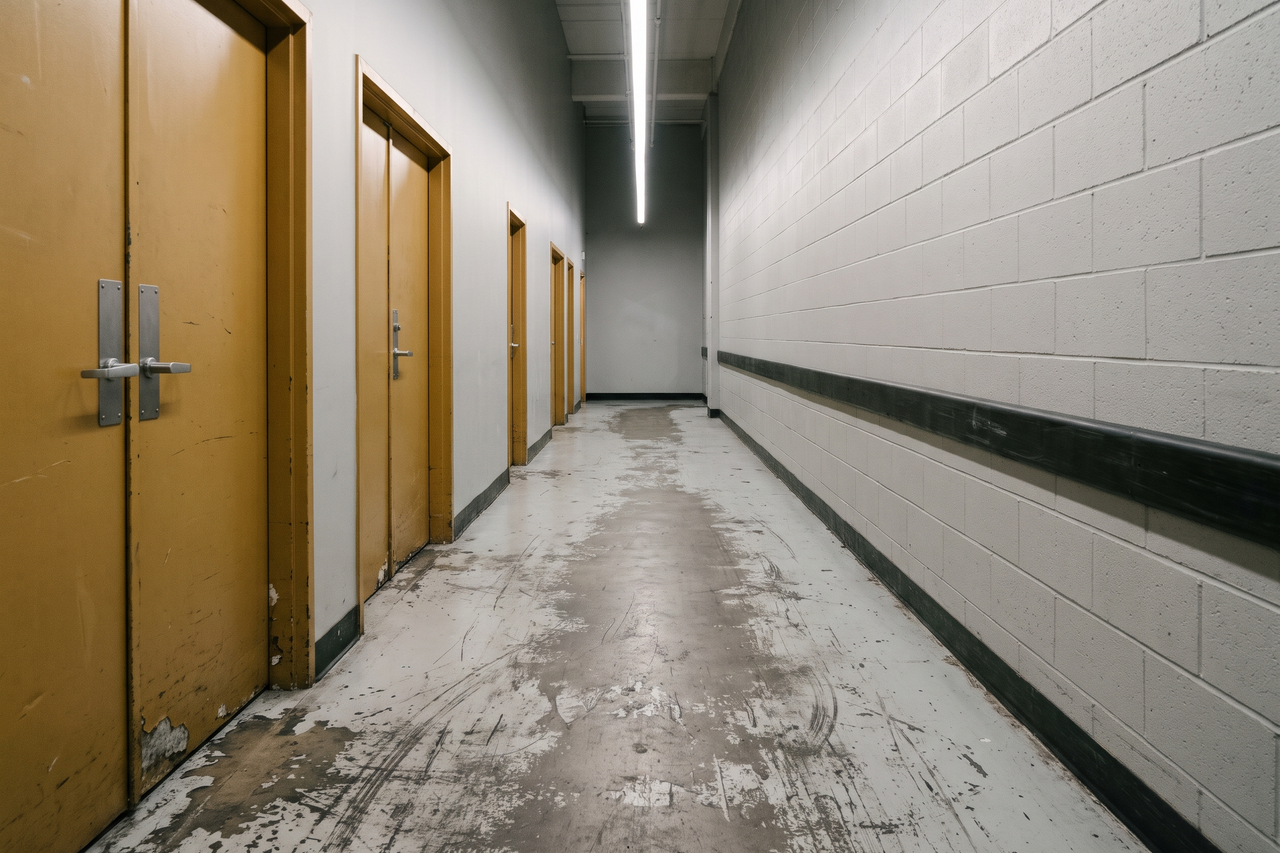
Think of a busy service corridor where the coating has started to peel along its seams. A flaw that seemed cosmetic grows teeth. Lifted edges catch toes, and dirt jams into gaps where a mop can’t reach.
Correcting that inside a business that’s still operating costs more than labor and material. The section gets roped off, racks or equipment get relocated, the old coating comes up, the concrete is inspected and prepped, and a new system goes down, all as an unplanned expense that lands without warning.
Choosing a coating based on the way the space truly operates, and investing real effort in prep beforehand, is the best defense against that scenario.
A Floor That Makes Your Space Work Better
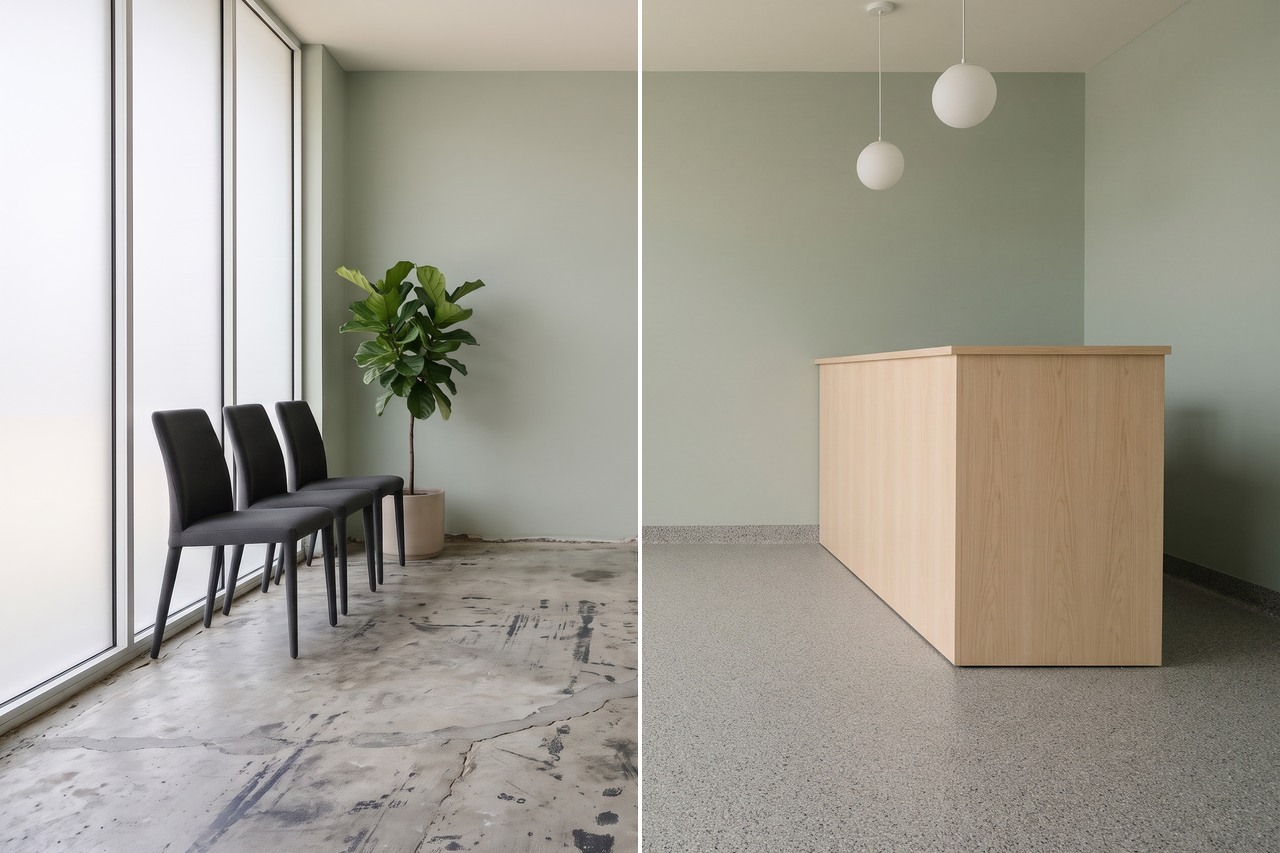
Choose a coating for the conditions the floor genuinely faces and routine upkeep gets a lot simpler. Spills stay on the sealed surface where staff can wipe them up before they penetrate, with no specialty cleaners required. Sweeping and mopping cover most maintenance, and the sealed floor handles frequent cleaning far better than bare concrete would under the same routine.
Overhead lights get more mileage, too: a coated surface bounces back more of their output than bare slab, and aisles and work zones can look brighter without touching a fixture. Safety striping, color-coded zones and wayfinding marks can be built in, depending on the system’s limits and your installer’s advice for the layout.
Pick a coating to fit its environment, and the floor stops being a constant maintenance burden and starts supporting the way the business runs.
What Does Commercial Epoxy Flooring Cost?
Every commercial project prices out differently, based on square footage, concrete condition, how much prep and crack repair is involved, the right system for that environment and the finish picked. Calling for tougher chemical resistance, extra slip resistance or a specialty finish raises both the prep and the material requirements.
Planning the work around operations, or dividing it into sections, depends on the project and on the contractor. It’s a topic worth putting on the table early, while the estimate is still taking form.
Common Commercial Flooring Questions
Will we have to close the business while the floor gets coated?
It varies with the facility and how much floor the job covers. In certain layouts, work can move section by section with the remainder staying open; others need everything cleared. Whether and how the job gets phased or scheduled depends on the project and on the contractor, which your installer can walk through once the space has been reviewed.
How hard is a coated commercial floor to keep clean?
Much easier than bare concrete. Spills sit on the surface and clean up with everyday products before they can soak in. Regular sweeping and mopping handle most of it, and the sealed surface stands up to repeated washing much better than unprotected concrete cleaned the same way.
Can epoxy handle heavy carts and equipment rolling over it?
Two things decide it: the product, and how hard your equipment is on the floor. Some coatings aren’t meant for the constant strain of heavy mixed traffic, ride-on scrubbers or fully loaded carts. While on site, the flooring professional studies your equipment, its loads and how often it crosses the floor before recommending a system.
What determines which coating is right for a commercial floor?
It begins with how the floor gets used. Foot and wheeled traffic, the weight it carries, whatever cleaners or chemicals routinely hit it, the level of polish customers expect and any access issues for the project all get reviewed, and those answers steer the recommendation.