
Epoxy Basement Flooring
in Chillicothe, MO
Once the basement floor is sealed and coated, the room has a clean, finished base for your plans, whatever they are.
Your Basement Shouldn't Feel Unfinished From the Floor Up
Downstairs, bare concrete sets the tone, and the tone says the job isn’t done. Whether you’re picturing a home gym, a craft room, an office or a laundry area, gray cement keeps the space feeling half built, and it’s the first thing people take in at the bottom of the stairs.
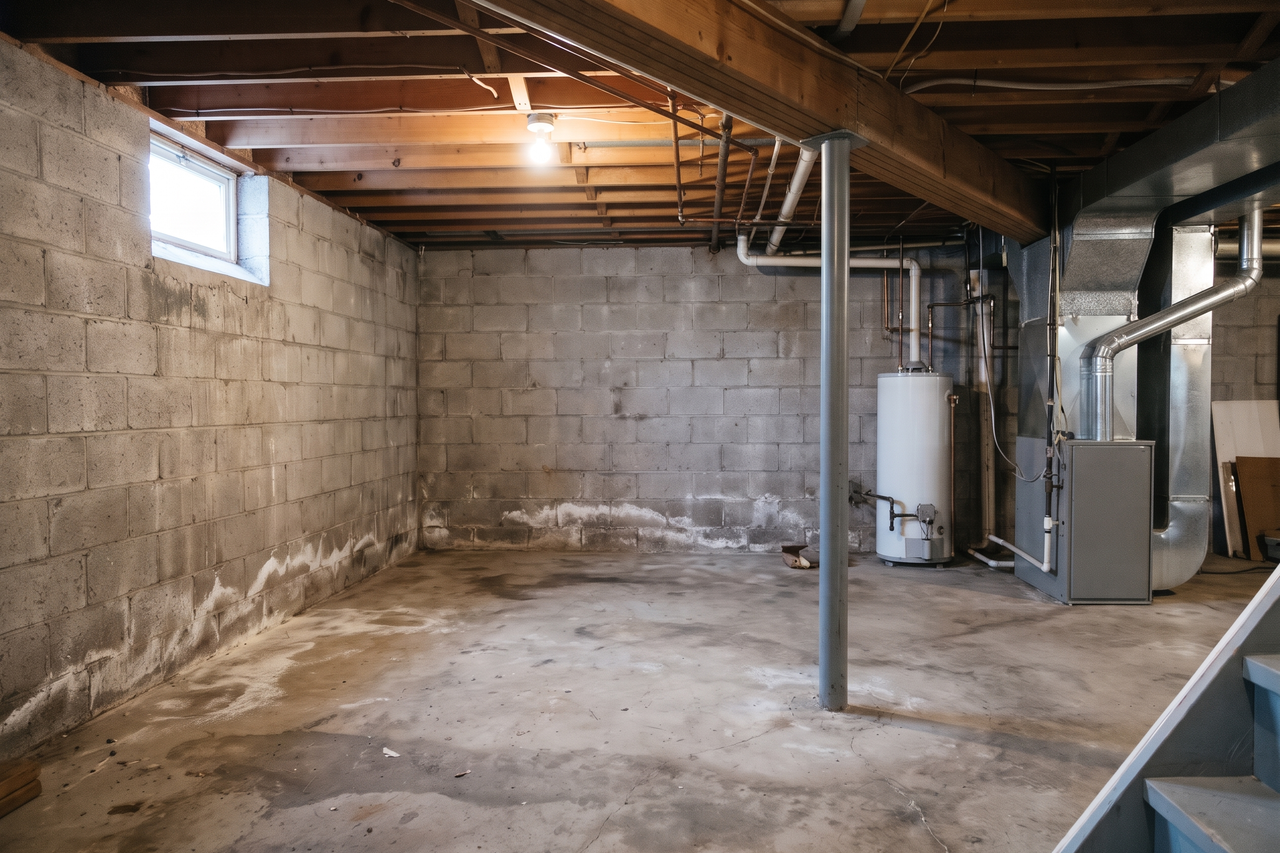
Raw basement concrete also fights you on cleanliness. Fine dust drifts up and lands on furniture and stored boxes. Spills soak in nearly on contact, leaving shadows no mop will lift. Sweep as often as you like; a porous slab doesn’t feel truly clean.
Flooring that does fine on upper levels can struggle below grade. A slab resting on soil plays by different rules than upstairs floors do, and moisture is the main reason. A coating made specifically for concrete gives the basement a floor that cooperates with those conditions rather than fighting them.
The Right Basement Floor Starts With the Concrete Underneath
A below-grade slab comes with more unknowns than most floors. Vapor rising from beneath, soil pressure on the outside, old adhesive or sealer, cracks and past patch jobs each affect how much prep is needed before any coating will bond.
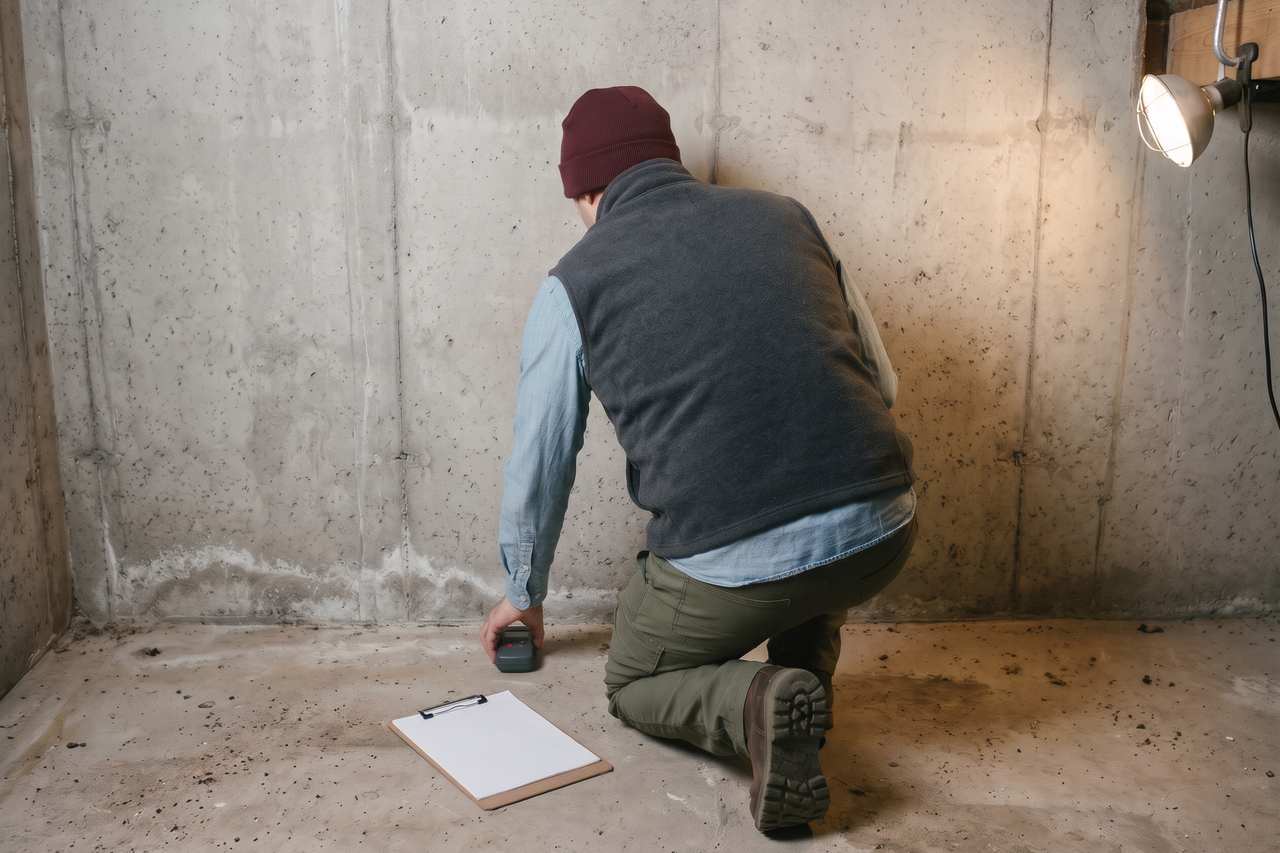
So before a system gets chosen, your installer looks the slab over: how moisture is showing up and how sound the concrete is as a whole. Skip it downstairs and the moisture picture stays a mystery, which gives vapor from underneath a chance to cause trouble that wasn’t visible when the job started.
Once the slab’s condition is known, choosing a finish is the easy part. Solid color reads clean and uniform. Flake brings grip and texture to floors with steady foot traffic. Metallic epoxy delivers a glossy depth no paint can imitate.
A Better Basement Floor Is Easier Than You Think
For most homeowners, the whole thing turns out more manageable than they’d feared.
01
Tell Us About Your Basement
Tell us what you want the room to be, what the floor looks like today and whether the slab has dealt with moisture or an old coating.
02
Choose the Right Floor
With the slab seen firsthand, the flooring professional explains what systems it’s able to support and points you toward a finish that works with its condition and your ideas for the room.
03
Transform the Space
Prep, coating and an explanation of the cure are all handled by your installer, who then returns the room to you with its new floor in place.
Ready to Make Your Basement Feel Finished?
Let us know how the basement looks right now and what you’d like it to become. To request a customized basement flooring estimate, a short description of the floor and your plans for the space is plenty.
Don't Turn Your Basement Floor Into a Project You Have to Do Twice
A basement coating that fails is usually reacting to something that was already there. Sealer or glue nobody removed, concrete that skipped grinding and moisture that was never tested top the list of usual suspects, and each of them is present before the first coat is rolled.
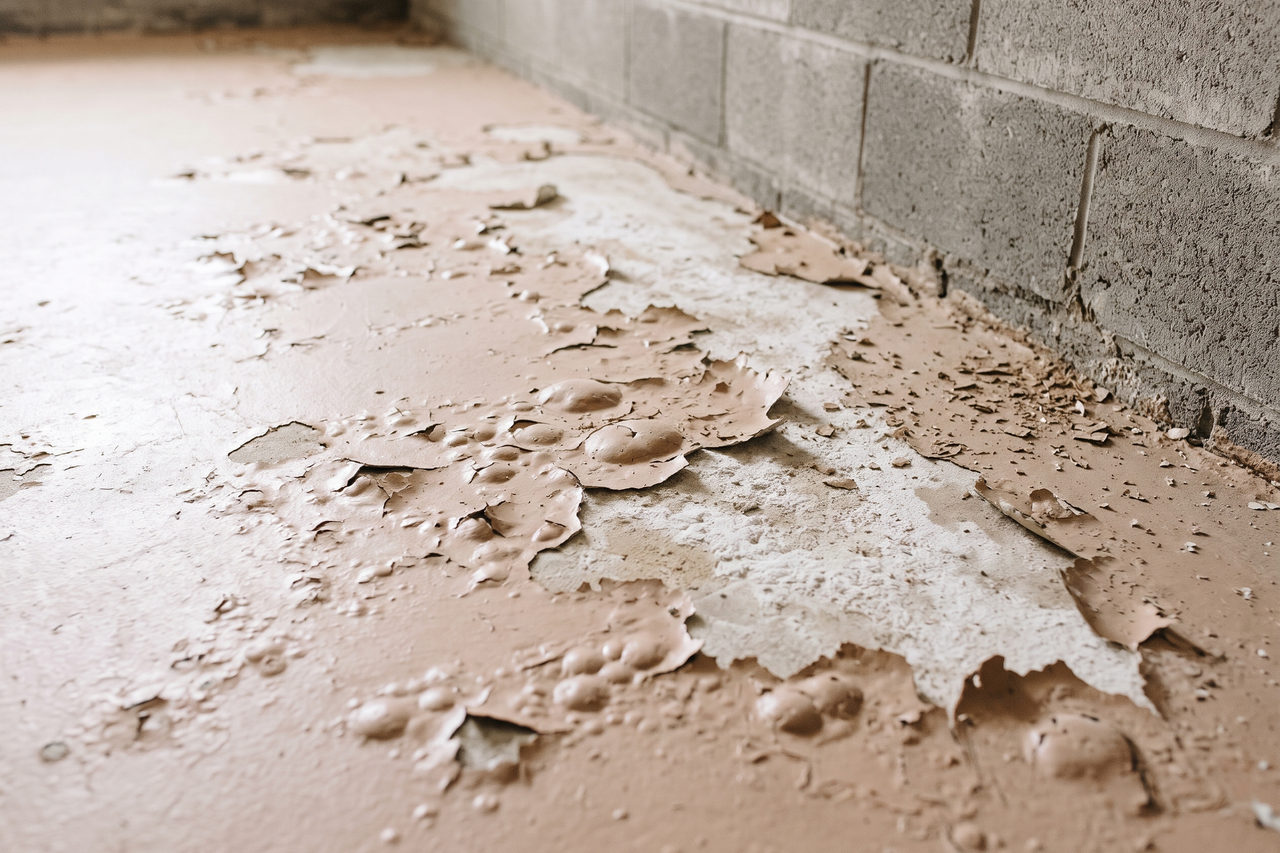
Below grade, moisture behaves in ways upstairs floors seldom deal with. If vapor drive and soil pressure aren’t evaluated beforehand, that pressure can shove a coating off the slab from below, producing blisters, peeling edges and loose spots in areas that seemed fine at first. Bargain jobs tend to leave moisture testing out, and the fallout appears after the work wraps up.
Handling grinding, crack repair and moisture checks before coating gives the floor a fair shot at holding up well over the long haul. Leave those out and the eventual fix often means grinding the failed coating off down to bare concrete, a bigger bill than doing the prep right would have been.
A Floor That Changes How Your Basement Feels
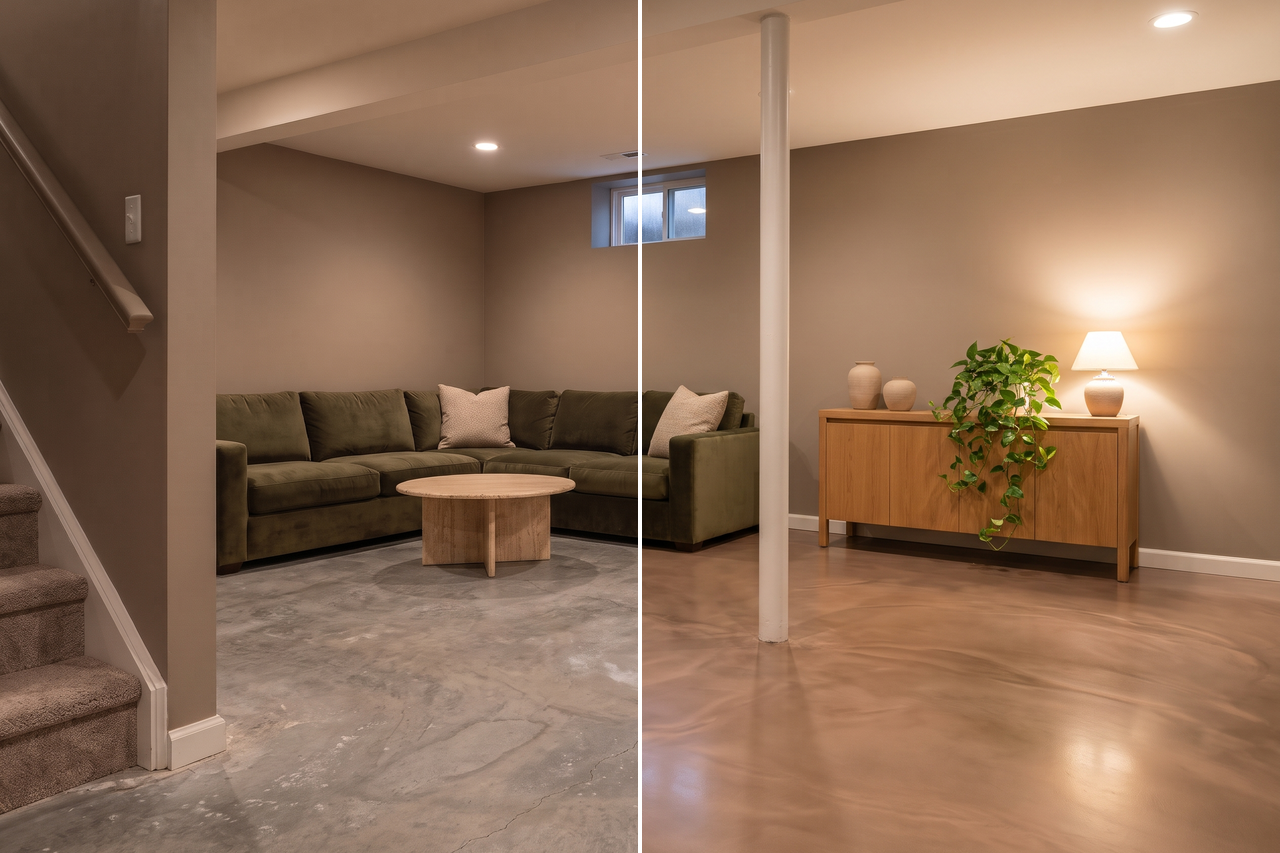
Coat the basement floor and the space feels different in ways you might not guess. Instead of soaking up light, the smooth surface bounces it around, so the room reads roomier and lighter than the old gray slab ever let it. Sweeping is easy, and spills wait on the surface for a towel.
The payoff is practical, too. A lower level that once stored overflow boxes becomes a room people choose to spend time in. Often the floor is what decides which of those two basements you get.
Basements tend to be used the way their floors were treated. Seal and finish the surface, and people read that the room deserves care; they usually respond in kind.
What Does Epoxy Basement Flooring Cost?
Basement coating cost depends on a handful of factors: floor size, what the inspection uncovers about condition and moisture, any old adhesive or coating that must come up, how much cracking needs repair, and the system and finish selected.
Generic price ranges don’t say much about basements, because the slab is what sets the real number. An estimate built on what your floor actually shows, plus what you want the room to become, is the figure to plan with.
Common Questions About Epoxy Basement Flooring
Can a slab with a moisture problem still be coated?
The answer turns on the way moisture is showing up and how high the readings come in, both of which need to be understood ahead of choosing a system. On certain slabs, a damp-tolerant primer may do the job, as may a vapor-barrier layer; on others, the moisture has to be fixed at the source first. After reading what the concrete reveals, your installer spells out which routes are realistic, and under what conditions.
Will coating my basement floor stop water leaks?
No. A coating protects the face of the slab, nothing more. Water coming through walls, foundation joints or failed exterior drainage needs its own repair, and a floor coating won’t stop it. Applied over active water intrusion, a coating is unlikely to stay bonded, so it’s no substitute for fixing the source.
Do previous coatings or old glue need to be removed?
Generally, yes. Old coatings, glue and residue sit in the way of bare concrete, robbing the new system of the bond it needs, and burying them under fresh coating undermines the floor from the outset. The flooring professional works out what it takes to get the slab where the chosen system needs it to be.
Underfoot, how is a coated basement floor different from bare concrete?
The concrete beneath hasn’t gone anywhere, so firmness doesn’t change and the surface temperature tracks the room’s. All the change happens on top: gritty, dusty concrete is swapped for a smooth, sealed finish. Rugs and floor mats work on it the same way they would on any hard floor.
Which finish options suit a basement floor best?
Basement projects mostly come down to three finishes. Solid color looks neat and even, and upkeep is simple. Flake adds texture and disguises everyday scuffs better. Metallic gives a rich, layered look that few floors can rival. Your pick should follow what the room is for and the look you like best.