
Industrial Epoxy Flooring
in Chillicothe, MO
Plant and warehouse concrete deserves a coating picked for its actual workload: the tonnage parked and driven across it, the liquids it catches, and the scrubbing and chemical contact built into a normal production routine.
Your Floor Takes the Abuse. Your Operation Shouldn't
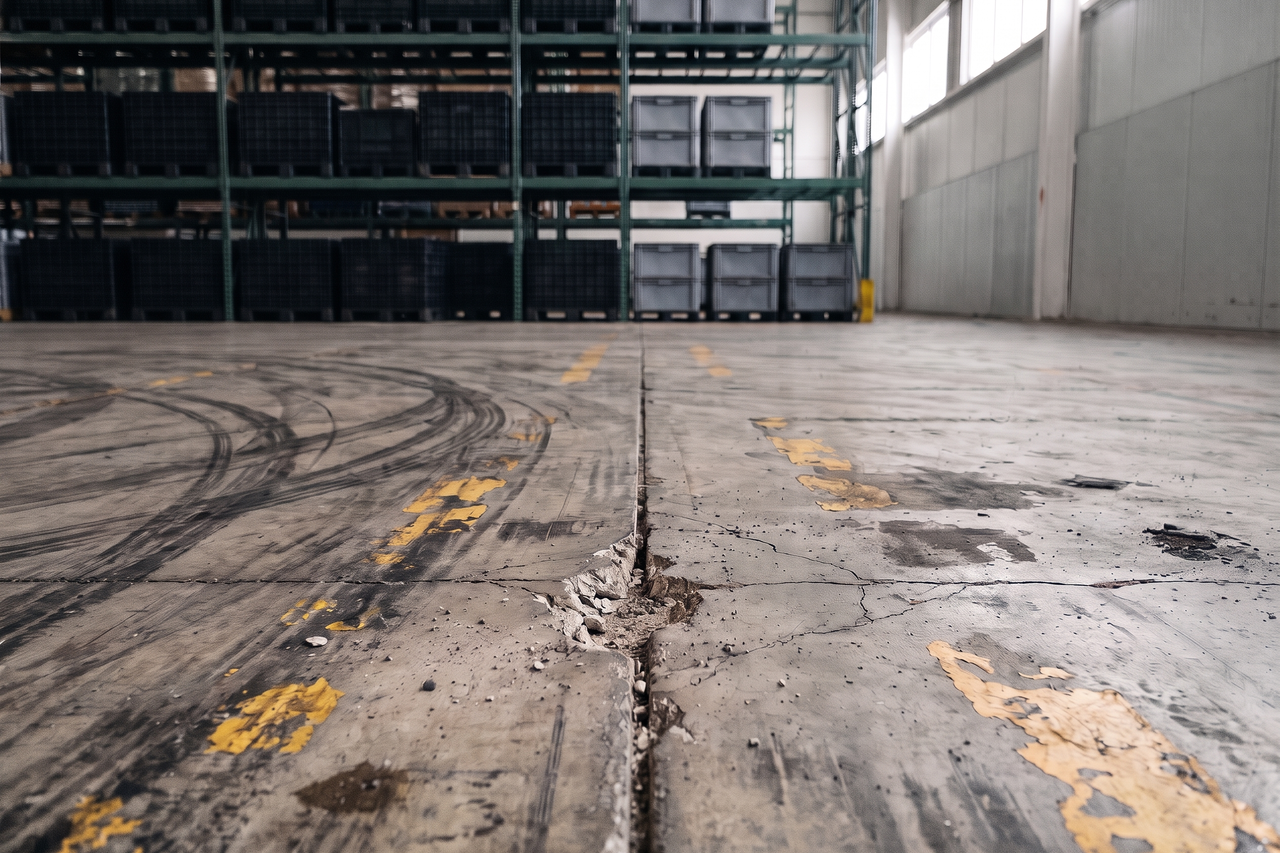
Most concrete never sees the kind of punishment an industrial slab absorbs. Forklifts and pallet jacks wear grooves into the same few travel paths, shift after shift. Big machines bear down on their footprints without letup. And when oils, coolants or process fluids escape the line, any uncoated concrete in reach drinks them in.
On move-in, a bare floor in a new building often looks fine. Then the traffic starts. Wheel contact and equipment grind at the surface and kick up dust that settles on product, racking and machinery alike. The heaviest-loaded pads and the busiest aisles give out first, and the deterioration creeps outward. Where spills happen routinely, the staining goes deep, past the reach of a mop and degreaser.
At some point the slab starts dictating how the work gets done. Drivers slow for rough patches and dips nobody drew into the floor plan. Janitorial effort climbs while results slide, because the concrete keeps opening up. Meanwhile every person on site, new hire or visiting customer, sizes up the whole facility partly by what is underfoot.
Your Facility Determines the Right Flooring System
Calling something an industrial coating says little about what it can do. Film build, rated load, abrasion and chemical resistance, and finished texture all swing widely from one system to the next. A product that thrives in one building can disappoint in another, so the decision has to rest on more than a quick look at the concrete.
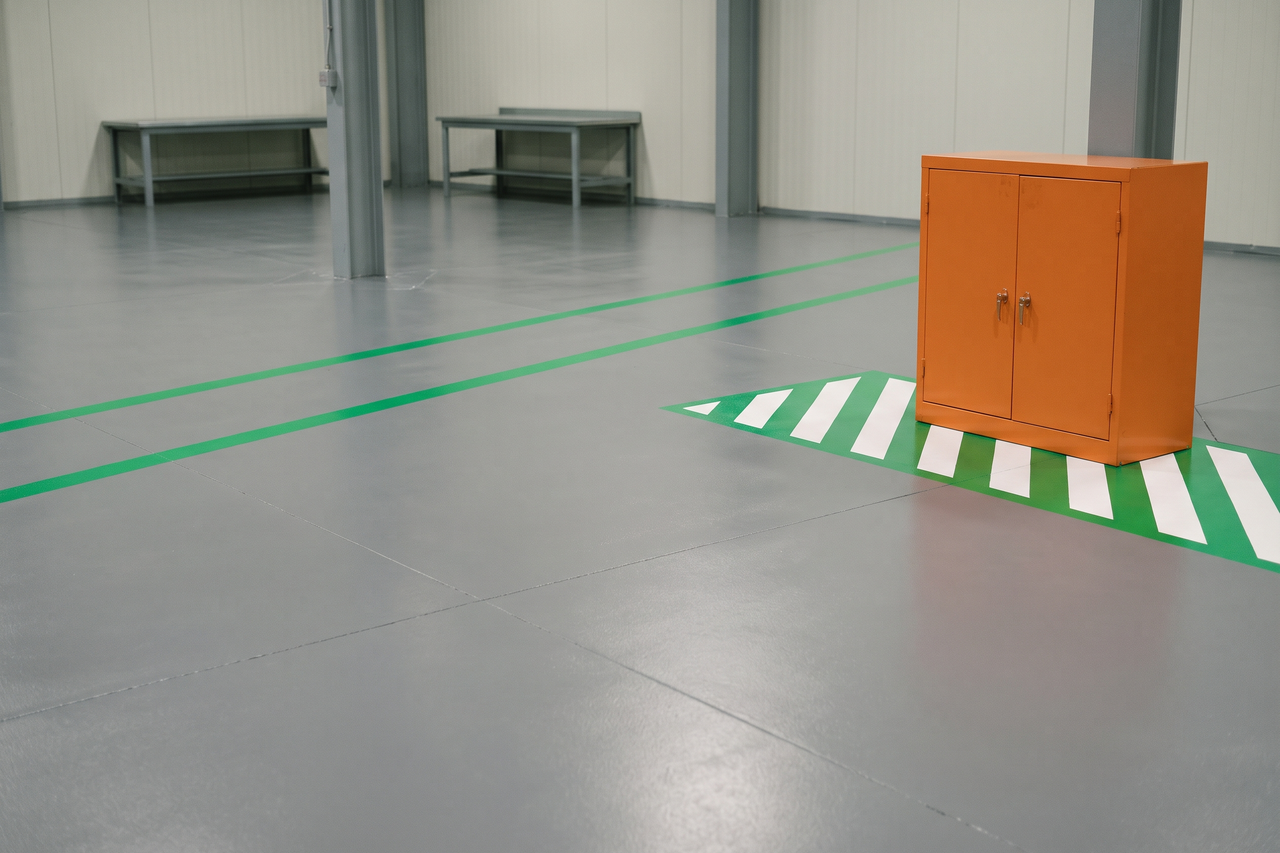
An industrial assessment by the flooring professional is really a study of the operation. Which trucks, carts and machines travel the slab? What chemicals land on it, and at what concentration? How is the floor cleaned, and how often? Does the space run hot, cold or swing between the two? Are striped aisles, marked safety areas or added grip part of the picture?
Compare a cold-storage room with a welding bay full of sparks and grinding swarf: one coating would face two entirely different lives. Vapor coming up through the slab, temperature cycling, radiant heat from equipment and specific chemical exposure together set the bar the coating must clear. Skip the on-site study, and choosing a product turns into guesswork.
Built Around Your Facility. Not the Other Way Around
Every solid industrial specification grows out of a clear picture of how the building actually runs. Product choice and work planning come second, not first.
01
Evaluate the Facility
During a walk-through, the slab’s present state gets documented: where vehicles and machinery concentrate their weight, what wear and damage already exist, and how much concrete preparation the job will take.
02
Build the Right Flooring Plan
From those findings, your installer lays out a system suited to the facility’s actual demands, spells out the prep scope and any concrete repairs, then sits down with you over the full plan before anything goes forward.
03
Put Your Floor to Work
The coating goes down according to a project sequence the facility agrees to in advance. Staging and scheduling hinge on the particular project and on whichever contractor handles it.
Need a Floor Built for a Tougher Environment?
Explain what the floor puts up with in an ordinary shift and what the project needs to solve, and you can request an industrial flooring estimate. Shots of the worst-worn or damaged spots are worth attaching.
Floor Failure Creates Problems Beyond the Floor
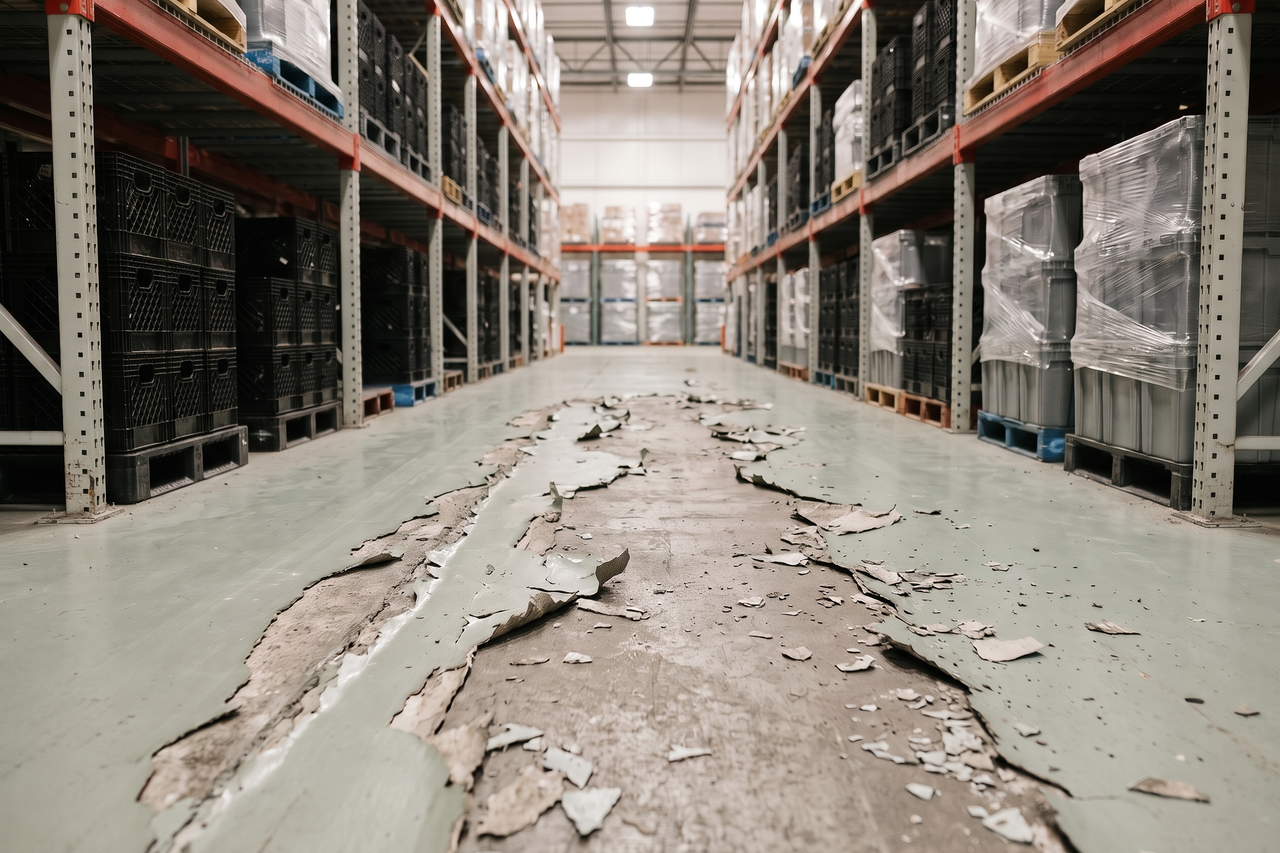
Coating failure on a production floor tends to spread its trouble around. Chips break loose, drift into aisles and gather against machine bases, and suddenly a maintenance issue is a production concern. Zones that used to run cleanly become places everyone detours around.
Once a failed coating exposes the concrete, restoring it is much harder than working on a slab that started in fair condition. Ongoing operation forces contaminants down into the surface, and the bare patch only gets harder to control as it widens.
Owners are often surprised by how much a failed industrial coating takes to fix. The area must be emptied and closed, the old coating stripped off to raw concrete, and the slab reworked until a properly chosen system can go on correctly. All told, that recovery frequently outruns what careful planning of the original job would have cost.
A Floor That Keeps Up With Your Operation
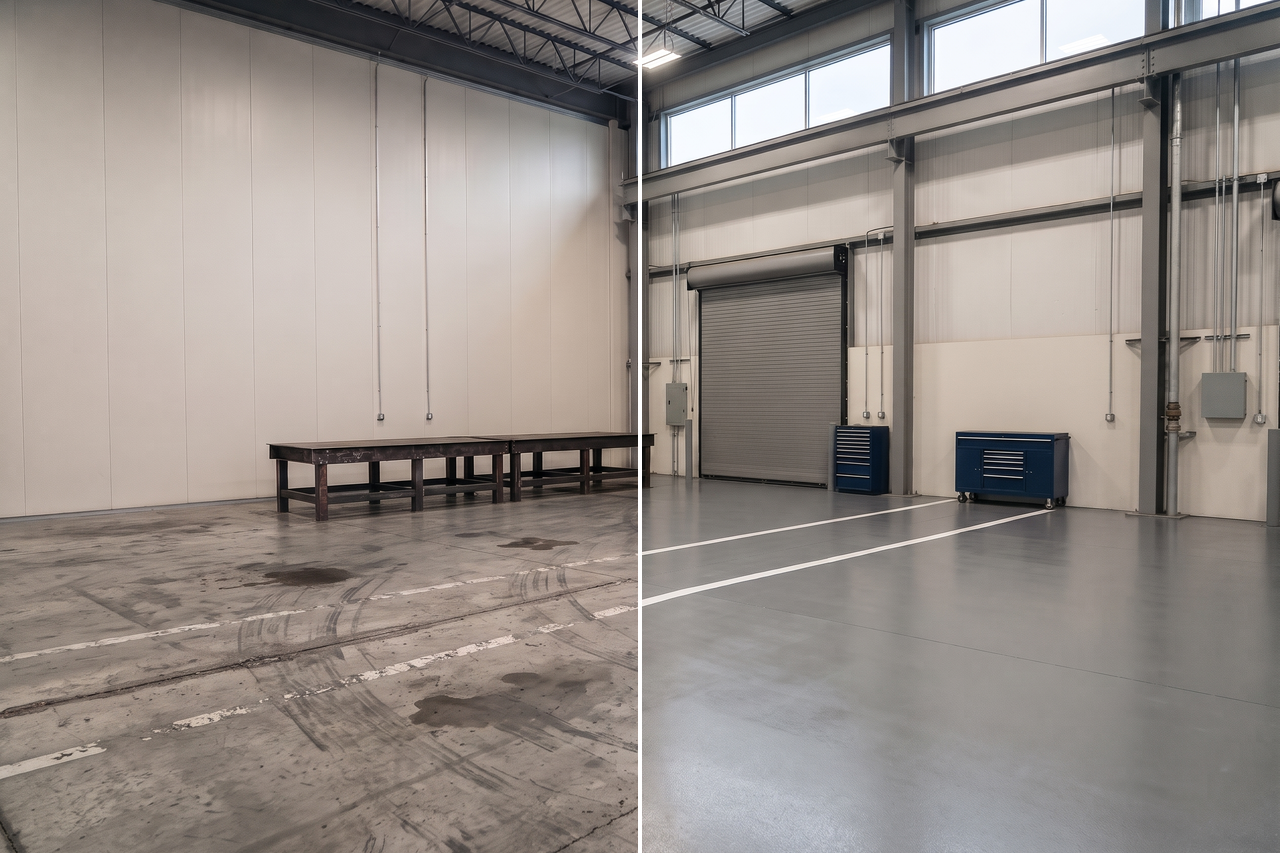
Choose a coating that fits the workload and the maintenance story shifts. Traffic, washdowns and chemical splashes meet a surface built to take them, not porous concrete that holds onto everything. Cleaning effort covers more ground once the floor itself stops shedding grime.
Dust drops off sharply once concrete is coated, compared with an open slab, which matters wherever air quality and machine upkeep do. A finished floor also returns much more light from the fixtures overhead, so aisles, workstations and storage racks look brighter without touching the lighting system.
Striped lanes, marked safety areas, directional arrows and grip textures can all be written into the specification, subject to what the chosen system permits and what your installer thinks the building calls for. Laid out around real traffic patterns, the floor earns its keep instead of generating a standing list of repairs.
What Does Industrial Epoxy Flooring Cost?
Industrial coating pricing comes from the job’s particulars: square footage, the slab’s current shape, the scope of prep and concrete repair, how thick and how resistant the selected system is, and whether line striping or grip texture is included.
Square footage by itself cannot yield a trustworthy price on an industrial floor. Your installer examines the concrete, weighs the operation’s demands on it and accounts for the complete scope before quoting.
Common Industrial Flooring Questions
Is epoxy tough enough for forklift traffic?
That comes down to the system and to the way your equipment uses the floor: how heavy the vehicles are, what their wheels are made of, how often each path gets driven. Some formulations are engineered for nonstop powered-vehicle loads while others were never meant for that duty. Before naming a system, the flooring professional works through those factors at the site assessment.
How well do industrial epoxy floors resist chemicals?
Here the formulations really diverge: one coating may be unbothered by a given chemical yet falter against a different blend. Once the exact exposures are known, whether lubricants, process fluids or aggressive cleaners, your installer can weigh a system against the conditions on your floor instead of a broad exposure label.
Can the coating include aisle lines and safety markings?
Frequently, yes. Striped aisles, safety zones, direction markings and grip textures can become part of the system, depending on the products and the floor layout. Raise them early so they are planned into the specification from the outset rather than patched in afterward.
Will coating the floor disrupt facility operations?
Disruption is tied to the project and the contractor. Among the variables are the size of the area, the depth of prep and repair, the system being applied and the chance to phase the job so some of the building stays productive. Your installer talks through each of these before anything is locked in.